Workshop detail header
Original field notes

Mechanical Bitcoin movement,

The Bitcoin Watchmaker publishes original build logs, machining experiments, movement-design notes, and technical lessons from developing a mechanical watch inspired by Bitcoin.

This archive is the primary record: direct observations from the workshop, long-form write-ups, and ongoing research into horology, CNC, tooling, and Bitcoin-native complications.

Page 7 of 10. Showing 10 of 96 posts.

2024/11/11 17:20 UTC
TLDRWhen designing a watch movement, choosing the right jewels is crucial for reducing friction and ensuring smooth operation. Using straight jewels on the dial side and olive (bombe) ring jewels on the plate side, all while adhering to strict NIHS standards, helps maintain precision and durability. By ordering extra jewels, the process allows for adjustments without sacrificing quality, ultimately enhancing the watch's reliability. ⏱️
Show more Show less

Choosing the Perfect Jewels for Our Watch Movement

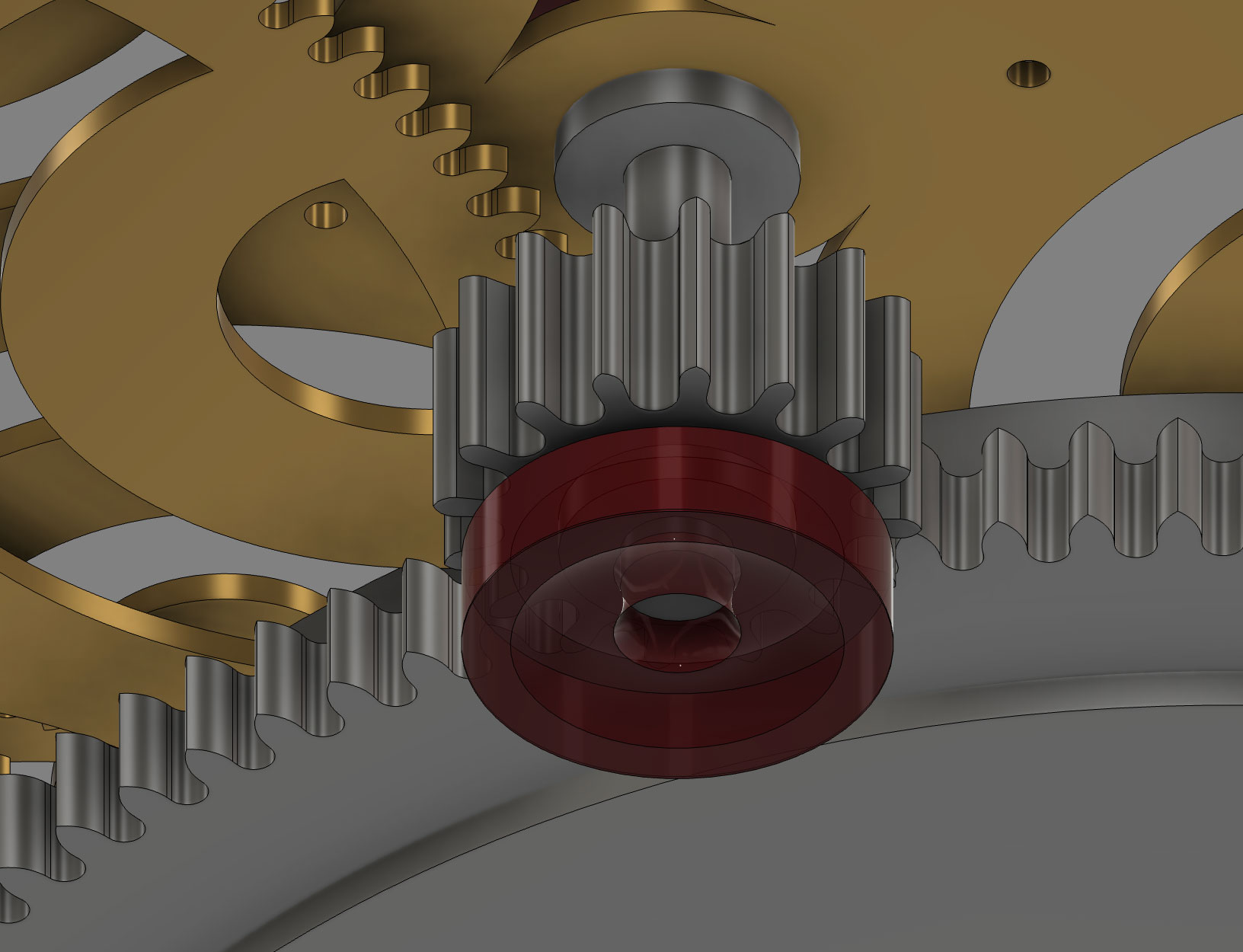
Today, I wanted to dive into an aspect of our movement design that’s been carefully thought out: choosing the right jewels. It’s a vital step, and I’ve spent a lot of time weighing options to ensure each component performs flawlessly, following the NIHS (NIHS 04-04F, NIHS 94-10, NIHS-05-01, NIHS-05-03) standards for precision and durability in watchmaking.

For this design, I’ll be using straight jewels on the dial side and olive (also known as bombe) ring jewels on the plate side. Each type has its own advantages, primarily in reducing friction and wear, which is essential for ensuring smooth movement in the train of wheels. The NIHS standards provided key guidelines for evaluating each jewel type’s fit and performance within the system.

To give myself some leeway during production, I ordered 18 jewels of each type: the R53.30 and R50.80K from swissjewel.com. This flexibility will help address any fine adjustments we need to make as we finalize the fit and finish of the train. These jewels are precisely sized per NIHS tolerances, so having extras means we can adapt without compromising progress or quality.

It’s a small but critical detail, as every watchmaker knows, but one that will ultimately contribute to a smoother, more reliable movement. Stay tuned as I continue to refine this design, one jewel and shaft at a time, always with NIHS standards as our compass!

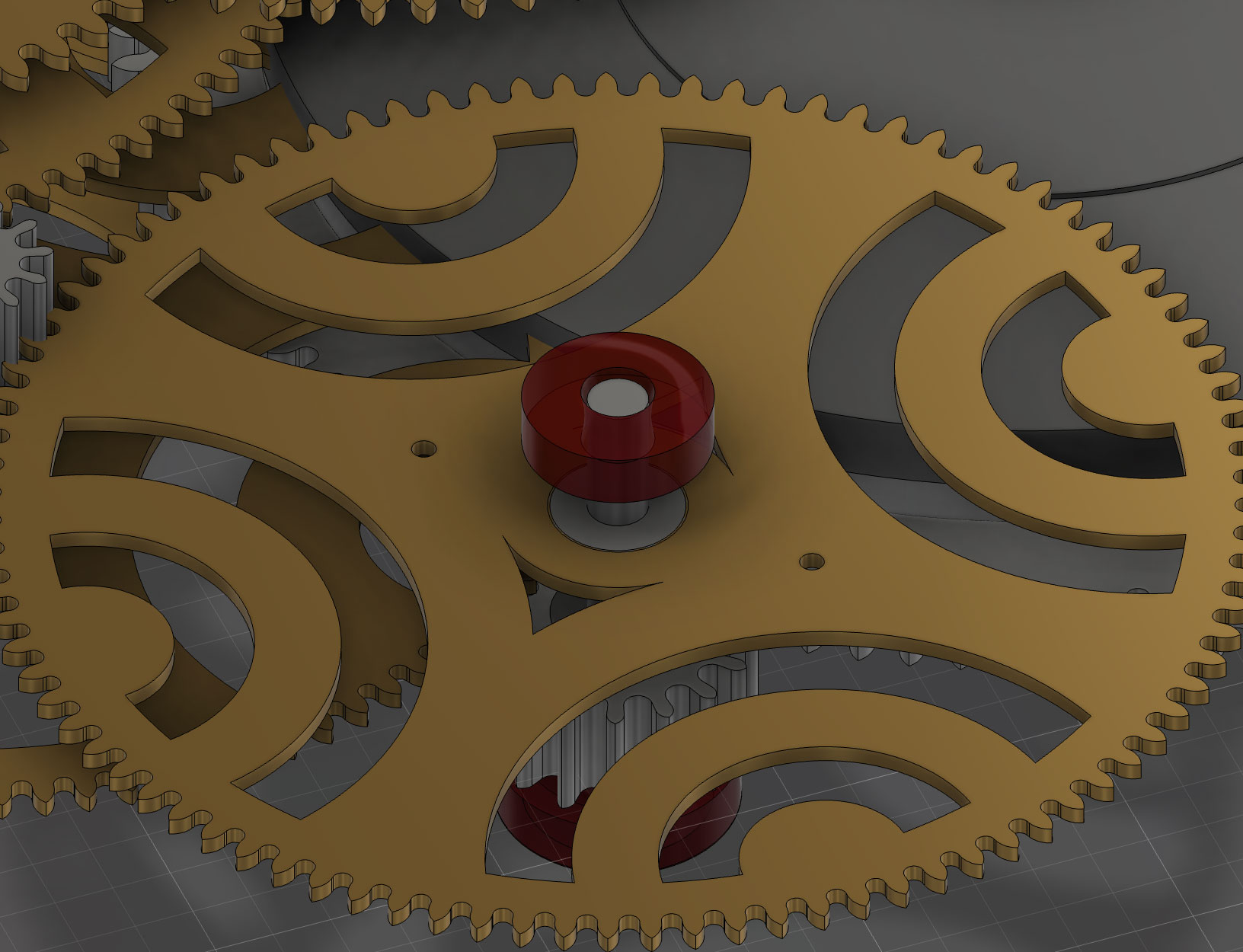
I'm also thinking of using the same jewels for the center, third and fourth wheels.

🤩

sketch sketch

Read standalone post

2024/11/10 11:23 UTC
TLDRHad a baby girl, soaking up the joy, and diving into watchmaking precision when there's a free moment. 🍼🔧 Learning about tolerances to perfect watch reliability—life's busy but the passion's still strong. Stay tuned for more updates!
Show more Show less

Life Update and New Adventures in Watchmaking

Hello everyone!

It's been a little quiet on Fezuone.co recently, and I wanted to share why. My wife and I just welcomed our beautiful daughter into the world, and we’ve been soaking up every precious moment with her. It’s been an incredible experience, and I’m truly grateful for this new chapter in life.

But while I’ve had to step away from the workbench a bit, I’ve been putting any free moments to good use—diving deep into the world of tolerances. This focus on precision will be crucial as I work on designing the shafts and jewels for the train of wheels. It’s been a fascinating study, especially as I consider how these micro-measurements directly affect a watch’s reliability and performance.

Thank you for your patience, and I look forward to sharing more soon. In the meantime, know that this project—and my passion for watchmaking—is very much alive, just evolving alongside life’s latest adventure!

Read standalone post

2024/11/02 10:52 UTC
TLDRUpdated the dial design with new hour markers, a splash of Super-Luminova, and a cleaner outer ring, but it feels a bit bare without the main plate and bridges. Once those are in, it should all come together beautifully. 📸 Used an 85mm lens for some cool depth-of-field shots to capture the details.
Show more Show less

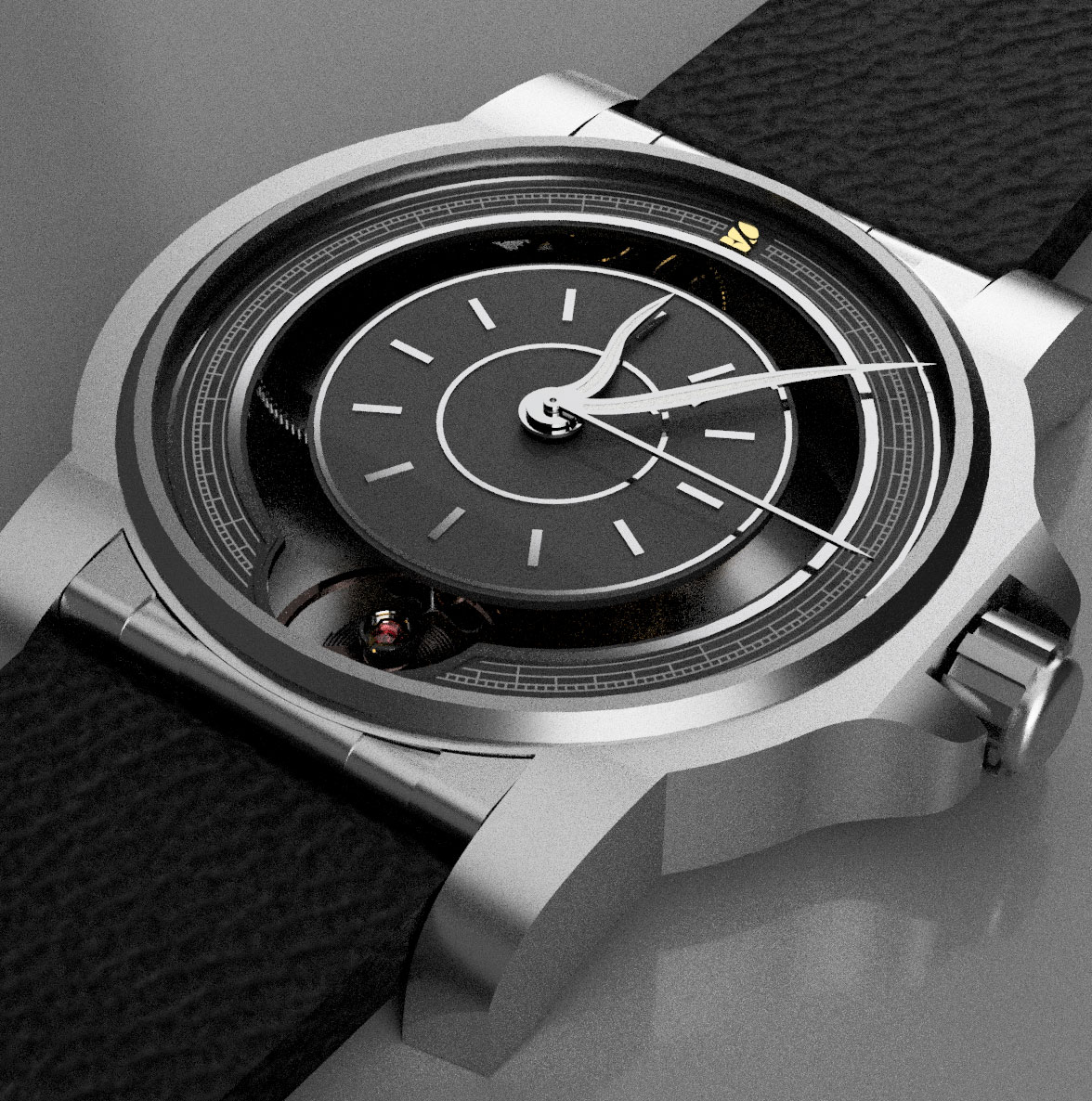
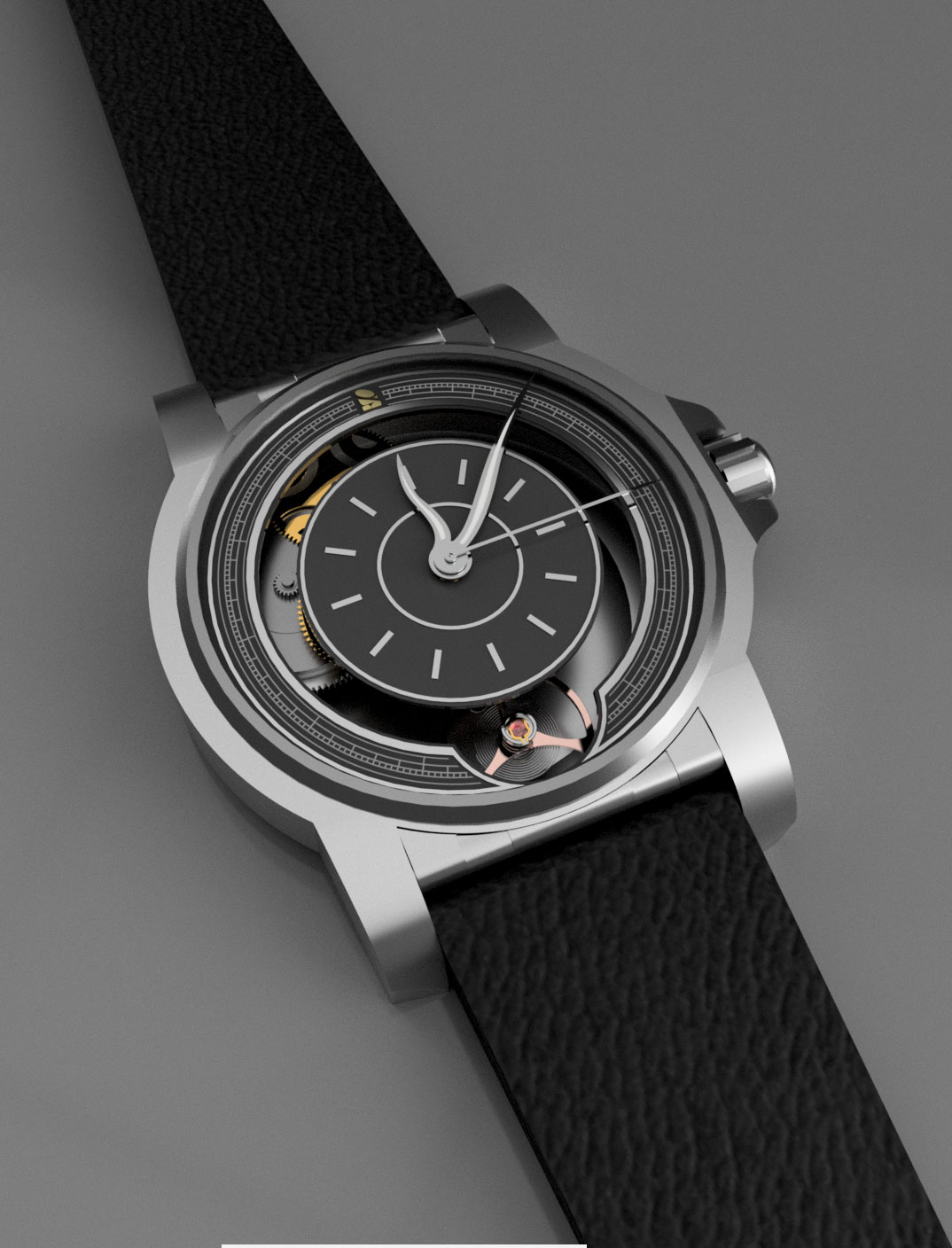
Dial Eye Candy: A Little Refresh

Taking it easy today and having some fun with the dial design! I decided to update the hour markers, added a touch of Super-Luminova, and simplified the outer ring pattern a bit. To capture the details, I played around with some depth of field using an 85mm lens.

Not totally in love with the empty look right now—feels like it’s missing something. But hey, once the main plate and bridges are in, it should all come together!

🤩


sketch sketch sketch

Read standalone post

2024/11/01 15:52 UTC
TLDRJust experimented with a new Super-Luminova design on the dial—still figuring it out but making progress! 🎨 More importantly, nailed the roller jewel positioning, which let me add a safety pin to keep the watch steady during knocks. Next up: tweaking the balance for better visibility.
Show more Show less

Balance and Super-Luminova Experiment

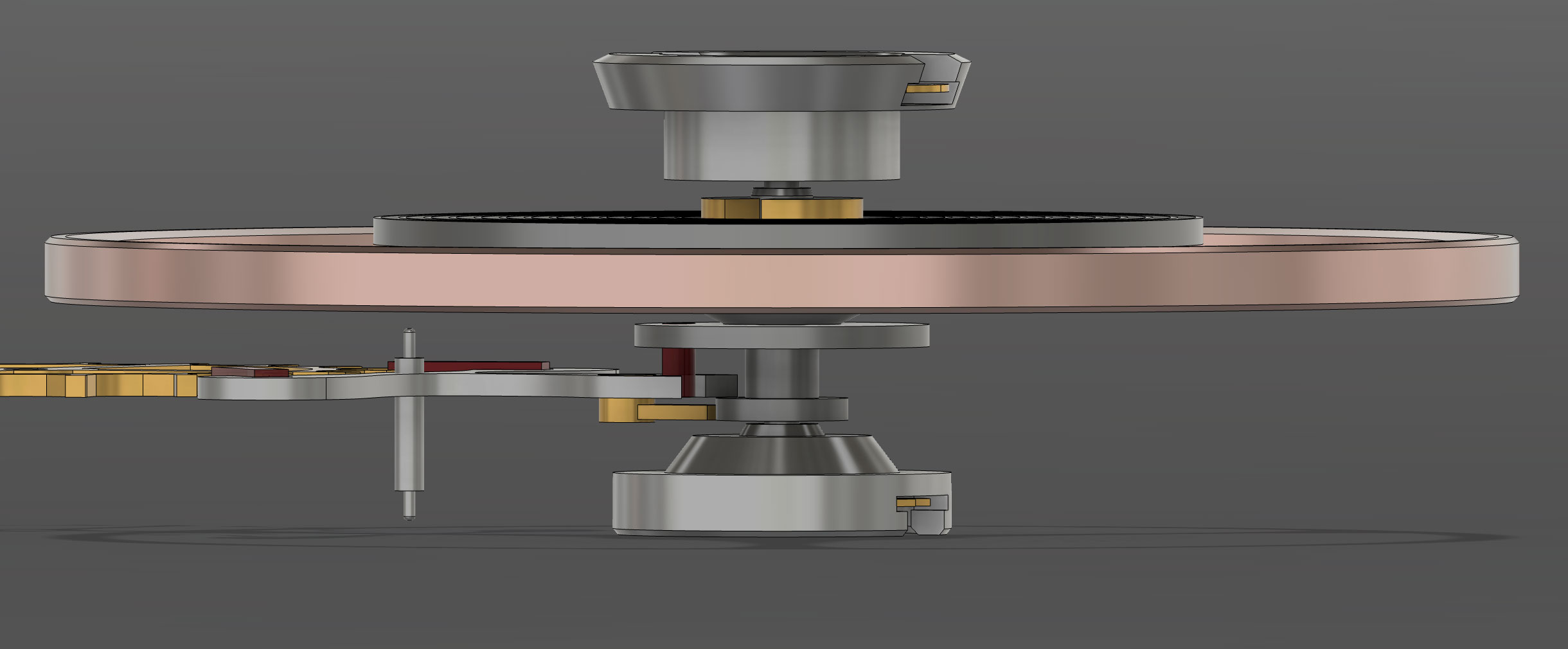
Tried out a new Super-Luminova pattern on the dial—still not totally convinced, but it's a start!

On the bright side, I finally nailed the roller jewel positioning, which let me add the safety pin. Turns out, it's all about keeping the balance locked when the watch takes a knock—who knew?

Next step: raising the balance just a touch so it’s more visible. Stay tuned!

🌟


sketch sketch sketch

Read standalone post

2024/10/31 15:52 UTC
TLDRI finally cracked the code to a smoother watch build by reordering the process: setting wheel positions first, then tackling joints, and wrapping up with wheel rotations. This tweak, along with a gear ratio fix that clicks perfectly, has brought my creation to life, especially with a new curved case that fits like a glove. Shoutout to Alberto Sicco and Charles Fontaimpe for saving my mainspring barrel mishap—next up, pinions and jewels! 😊
Show more Show less

Refactoring Adventures: Building a Movement from the Ground Up!

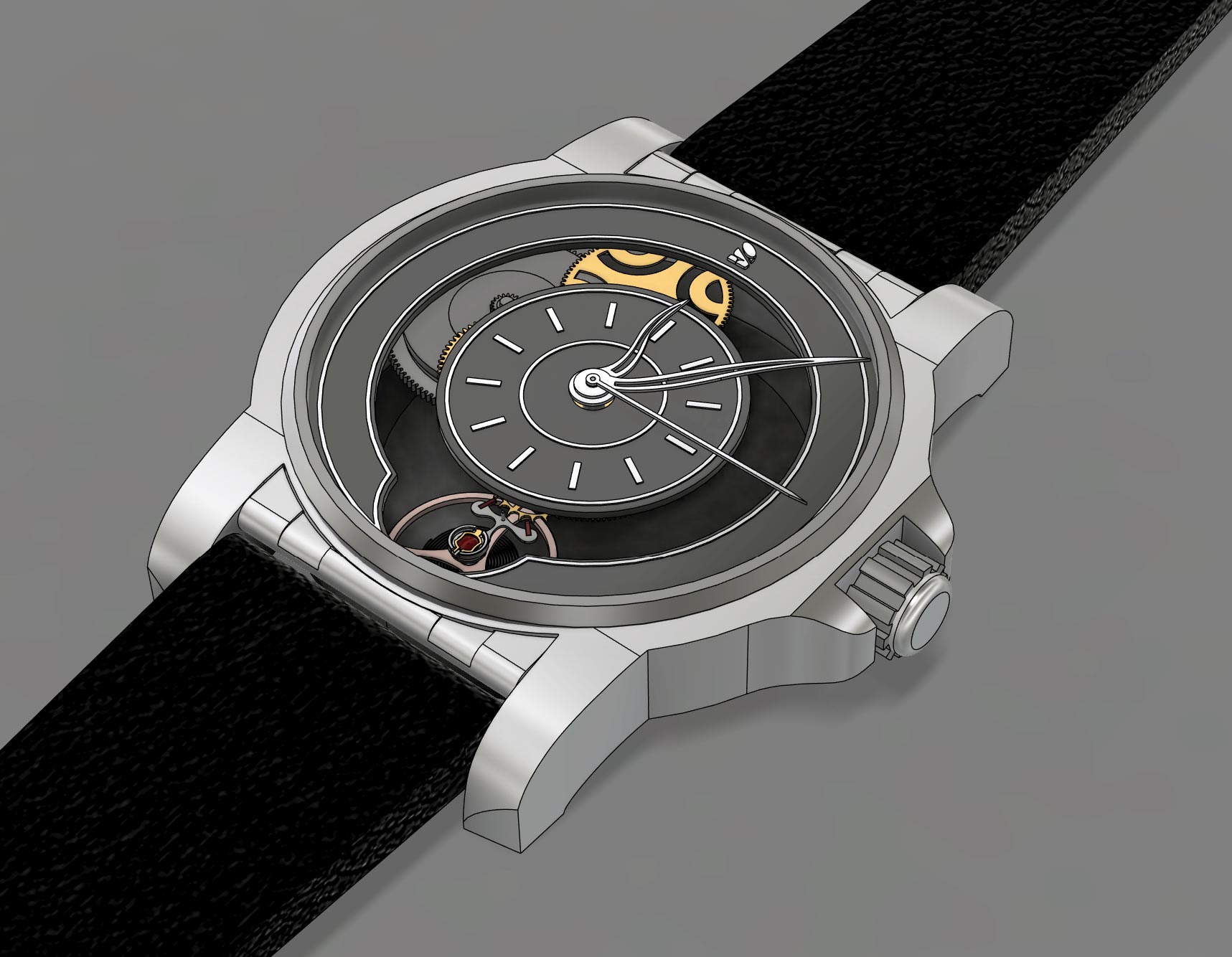
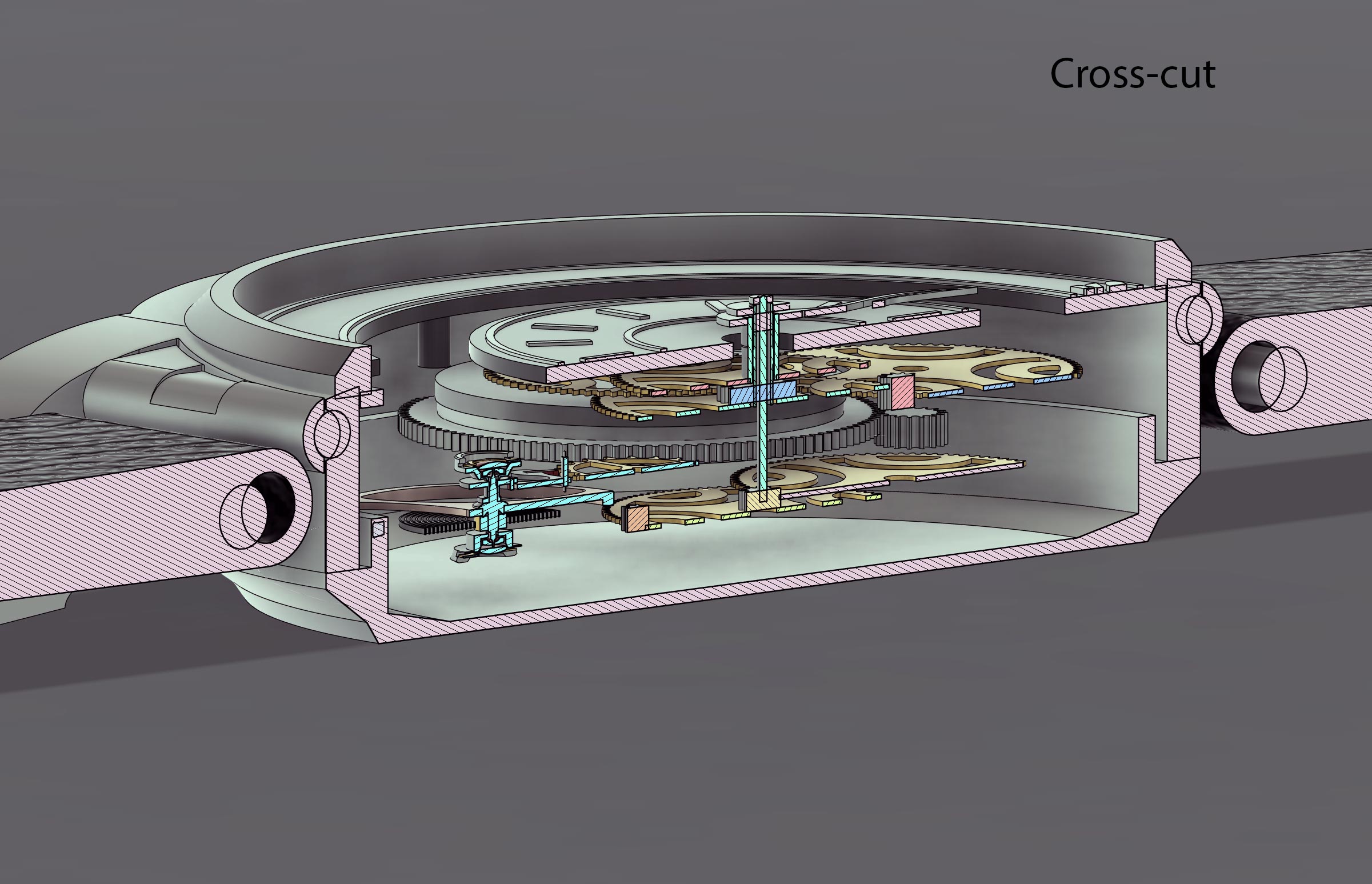
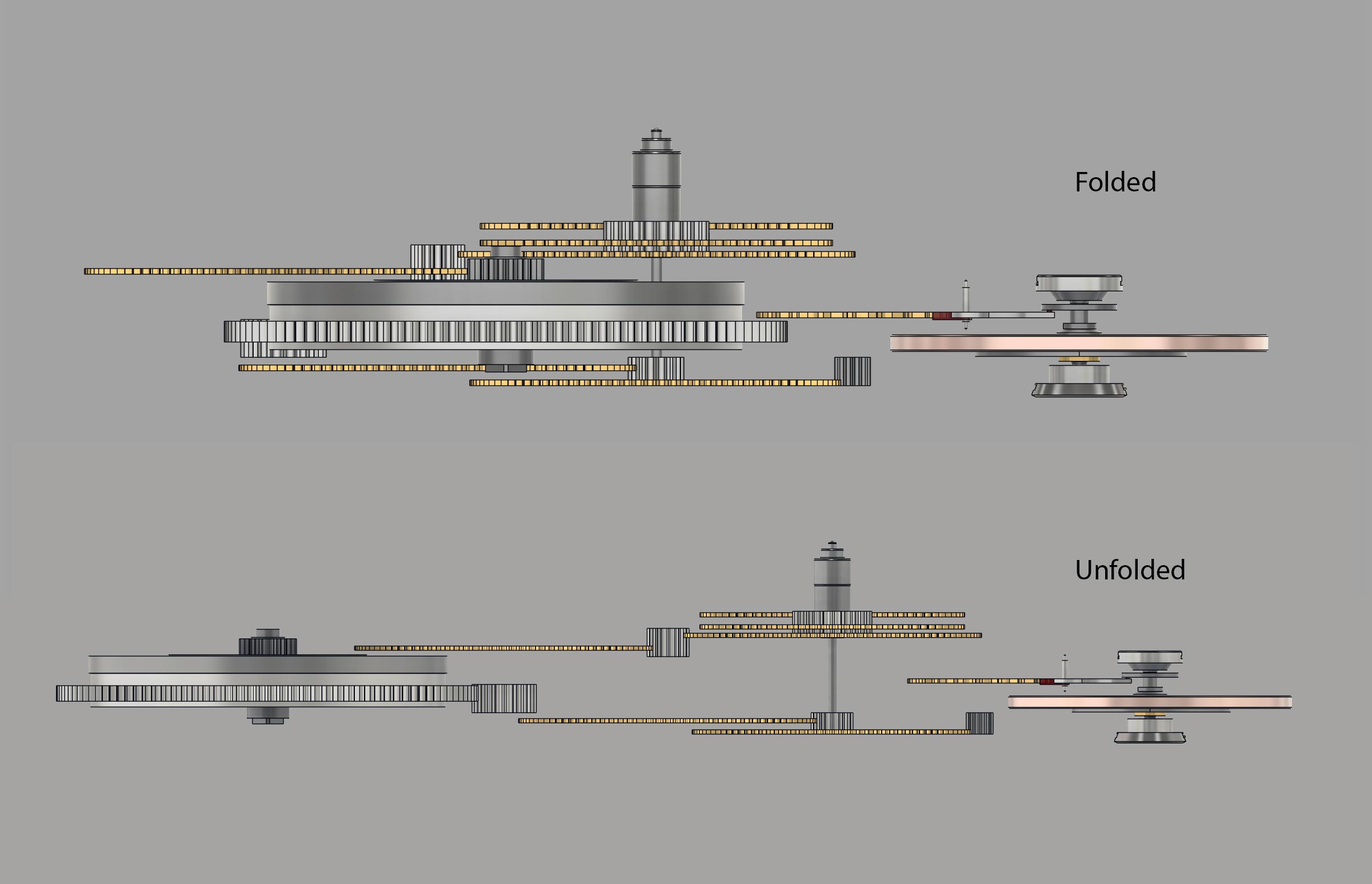
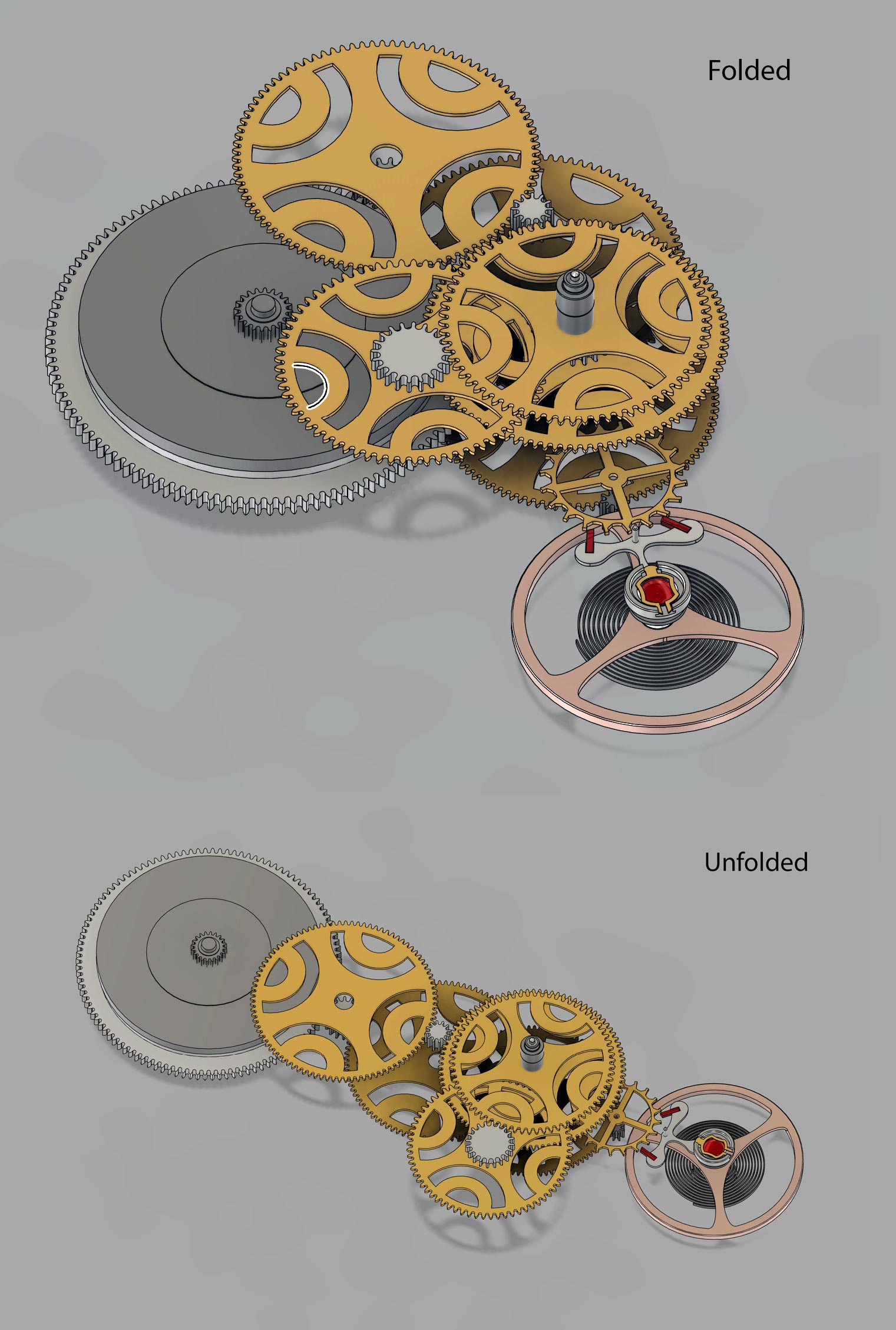
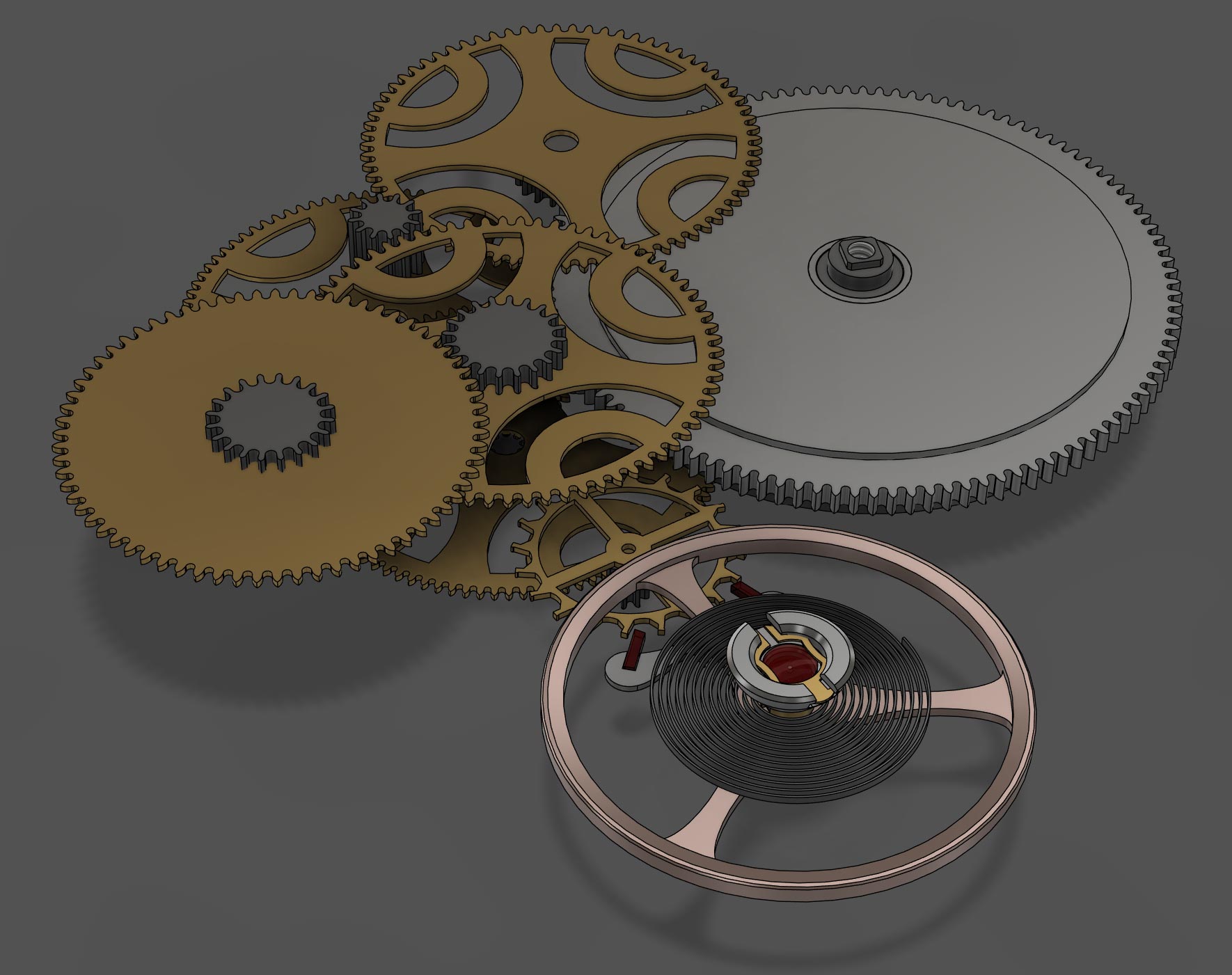
It took some serious tinkering (and a few dozen rebuilds of the train of wheels!), but I finally found a smoother approach—first setting up the wheel positions, then handling the joints, and finally rotating (or folding) the wheels into place. This way feels way more intuitive!

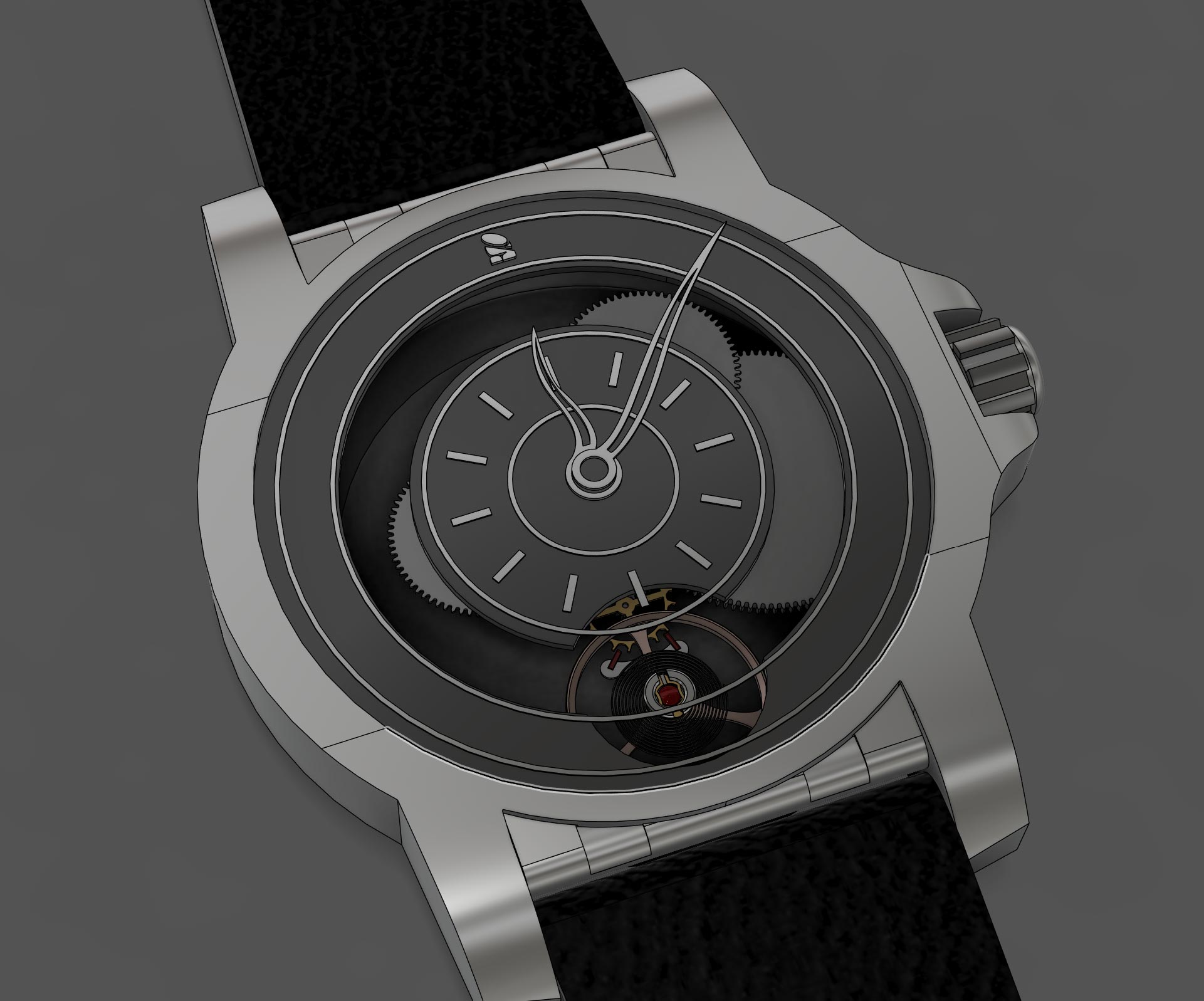
I also revisited the gear ratios in the train of wheels. Now, the hour wheel fits perfectly with the center wheel pinion—such a satisfying click when it all aligns! And yes, I've finally added the seconds hand to complete the time-telling trio.

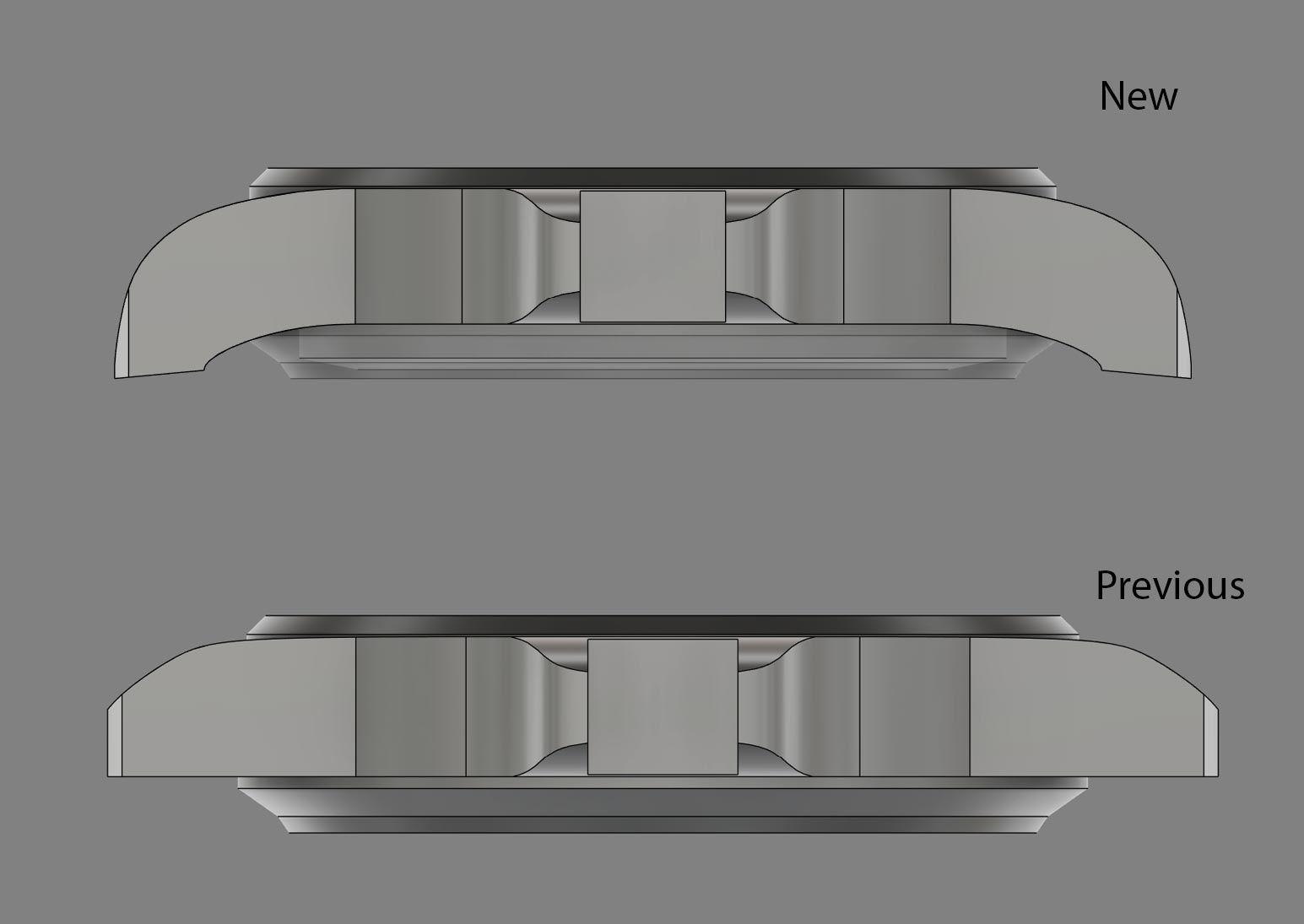
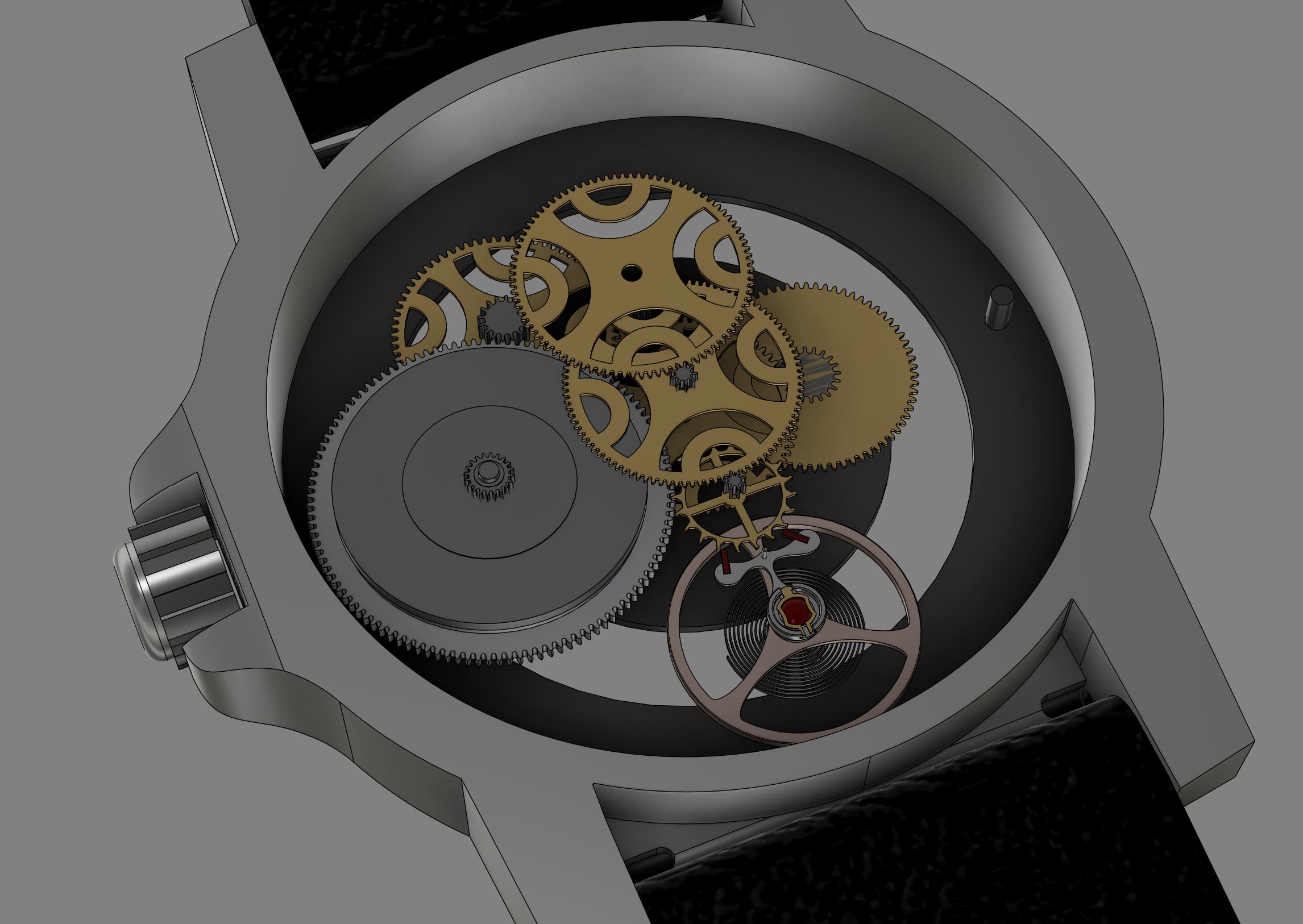
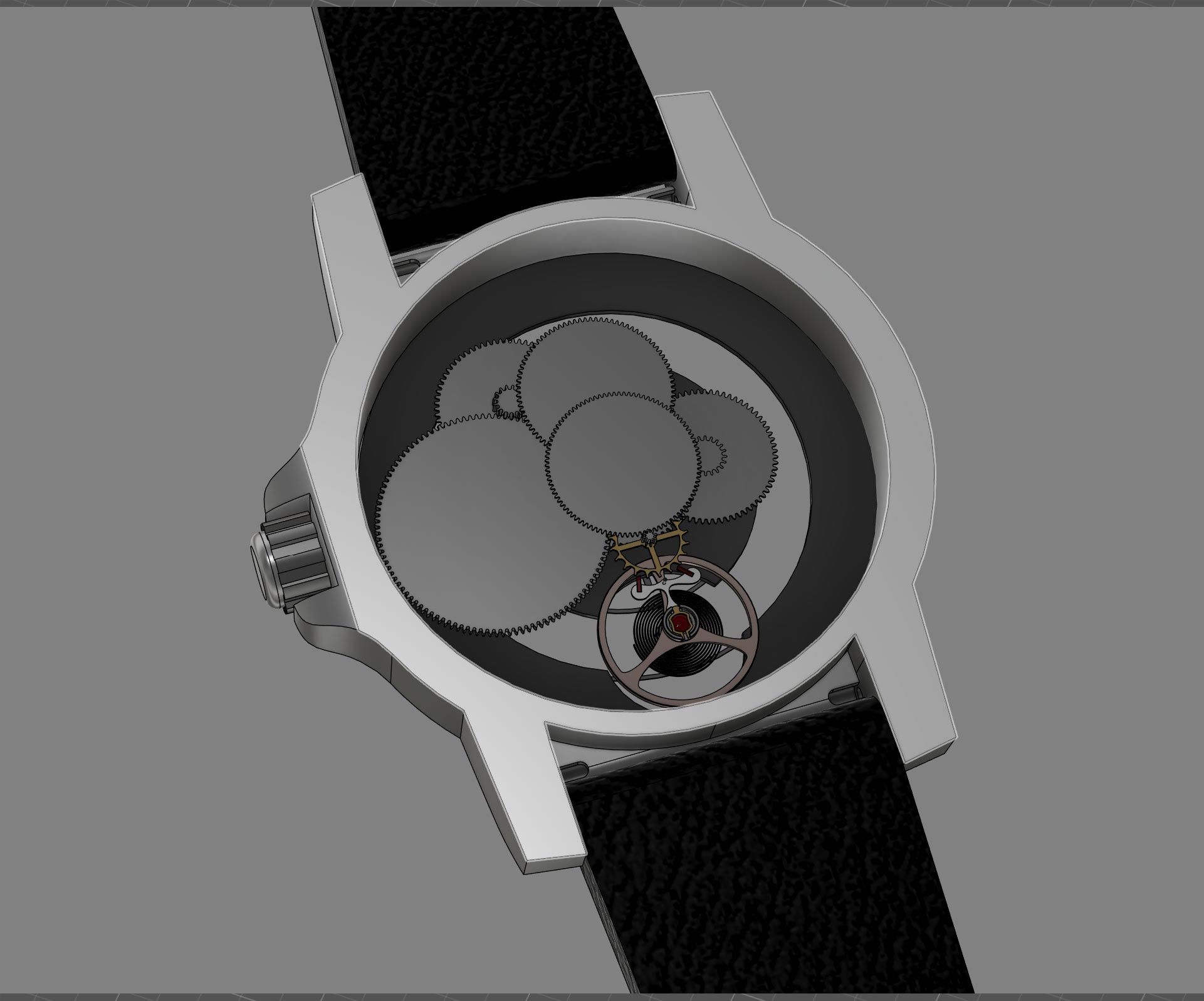
The case got a makeover too! It now wraps comfortably around the wrist instead of just sitting there like a flat disc. A little curve really makes it come to life on the wrist.

Next up, it's time to add the pinions to the wheels and get those jewels in place—so exciting! And after that? The bridges! Can't wait to see it all come together!

I gotta give a shoutout to Alberto Sicco, Charles Fontaimpe from generaleressorts.com, I had a pretty bad mistake in the mainspring barrel, thanks to his comment I could fix it!

😊


sketch sketch sketch sketch sketch

Read standalone post

2024/10/30 16:20 UTC
TLDRTried a new wheel design just for fun and it's pretty wild! 🚴‍♂️ Check out the sketches to see the funky concept that's shaking things up. Catch the full scoop on my blog if you're curious!
Show more Show less

Because why not

Testing out a quick different design for the wheels!

sketch sketch

🤯

Read standalone post

2024/10/30 12:27 UTC
TLDRHey! The blog post is about a watch design process update, where the layout now accurately shows hours, minutes, and seconds after a month of work. While some parts like wheels and jewels still need designing, the author is thrilled with the balance wheel's progress. The main challenge is aligning the center wheel pinion with the cannon-wheel, crucial for smooth operation. 🤯 Interested? Check out the full details [here](https://thebitcoinwatchmaker.com/post/view/previewing-a-potential-layout/).
Show more Show less

This is Exciting!

This layout is finally set up to show hours, minutes, and seconds correctly. Can you believe it's taken about a month to get here? Just one more detail to nail down (see last pic)!

Current Status:

  • Wheels aren't designed yet, so they're still looking solid and rough.
  • Bridges and jewels aren't in place yet either.
  • Unexpected plot twist: I'm officially in love with the balance wheel ❤️
sketch sketch sketch

Here's the "But"…

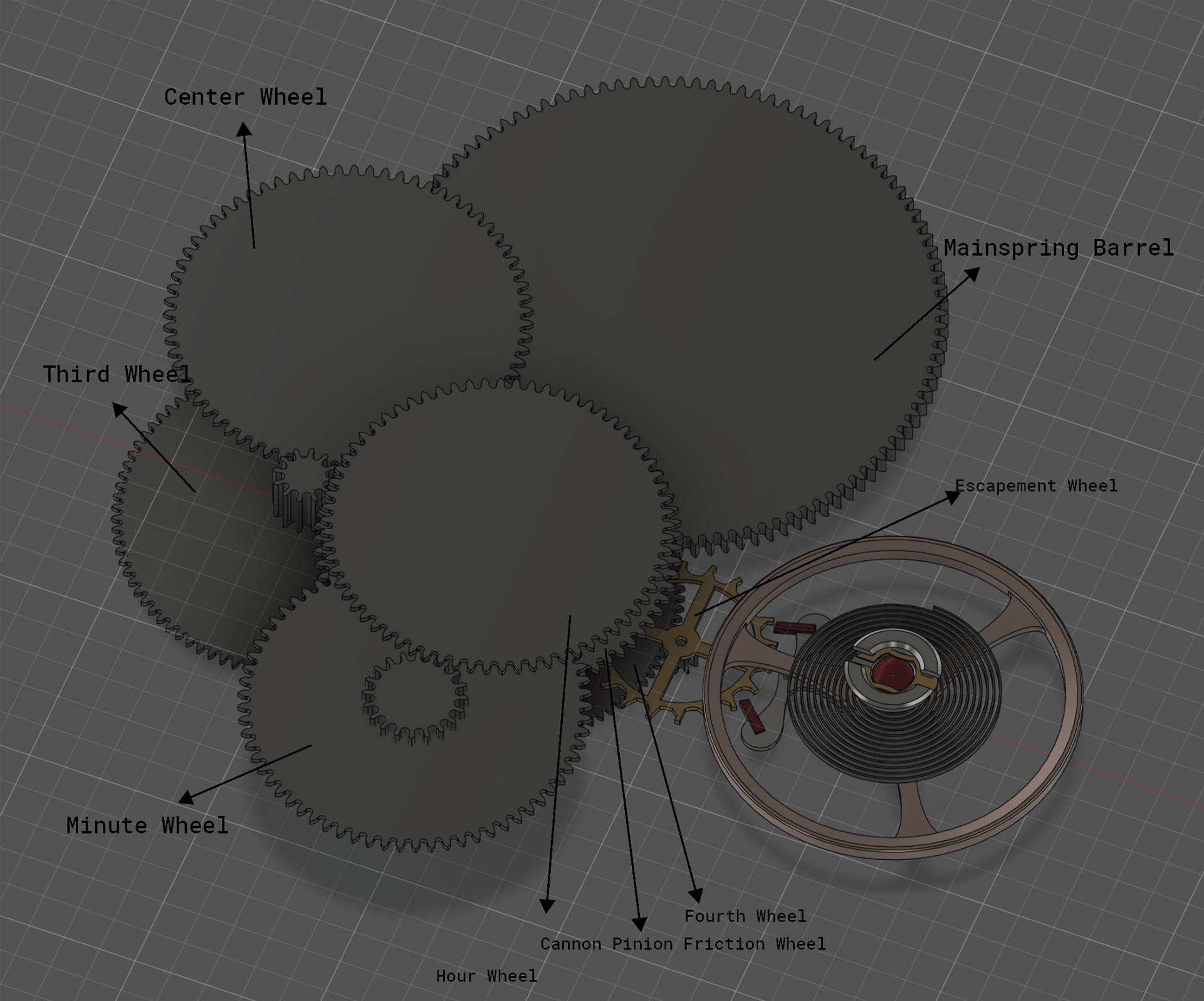
The center wheel pinion is where the magic happens for the coaxial hands. It drives a secondary wheel, and the cannon pinion is friction-fitted right on top of that secondary wheel.

So, what's the issue?

I'm struggling to get the dedendums of the center wheel pinion to line up properly with the cannon-wheel, especially since its axis is actually the fourth wheel. Gotta figure this one out to keep everything aligned!

sketch

🤯

Read standalone post

2024/10/28 17:43 UTC
TLDRPutting all the components together revealed a crucial design flaw: the current sizes of the wheels don't allow the cannon pinion to fit properly. 🛠️ This means a redesign is necessary, specifically adjusting the teeth counts, to ensure everything functions smoothly. It's a good reminder that sometimes you need the big picture to spot the small but important details.
Show more Show less

Seeing everything together uncover errors

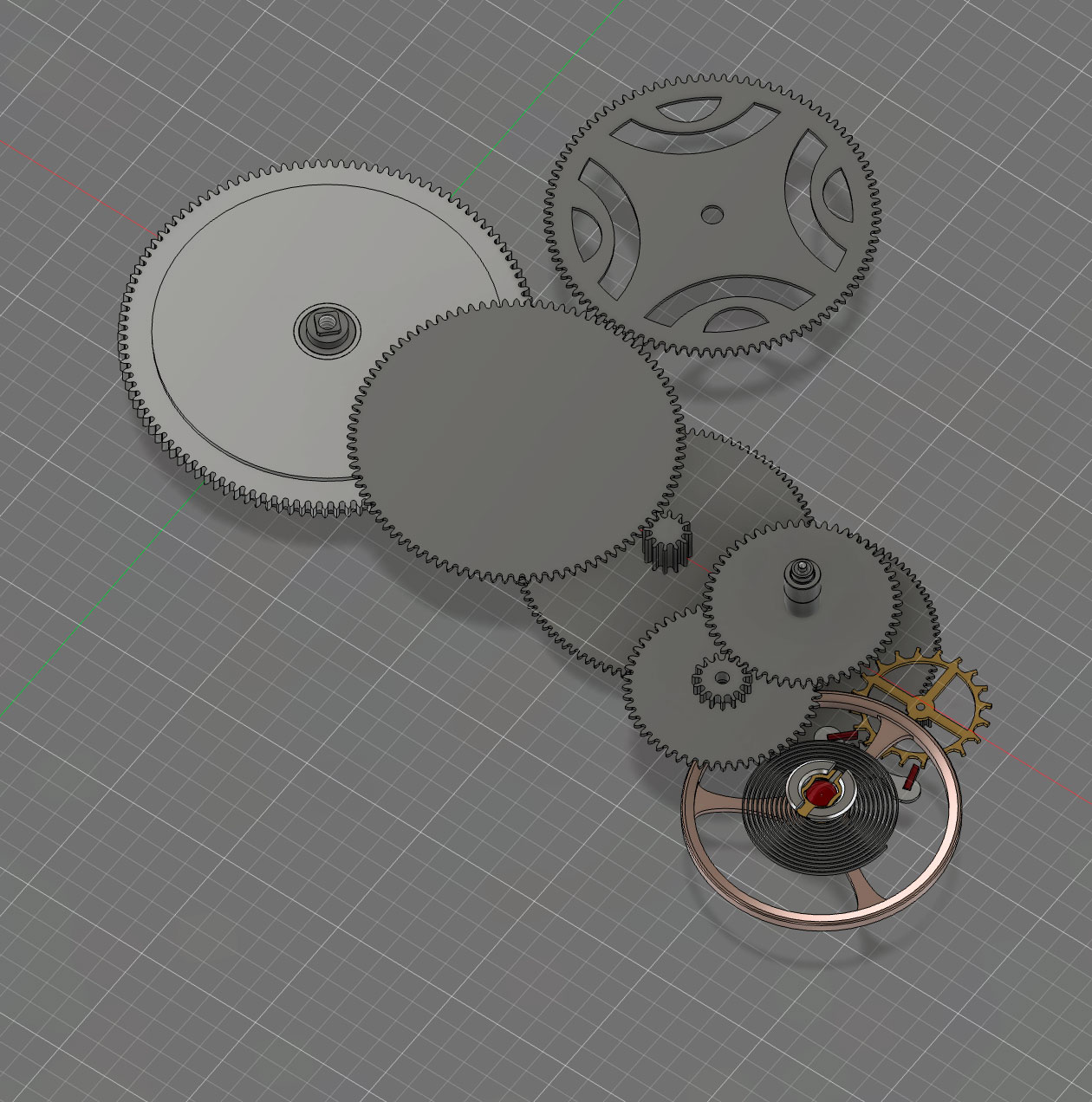
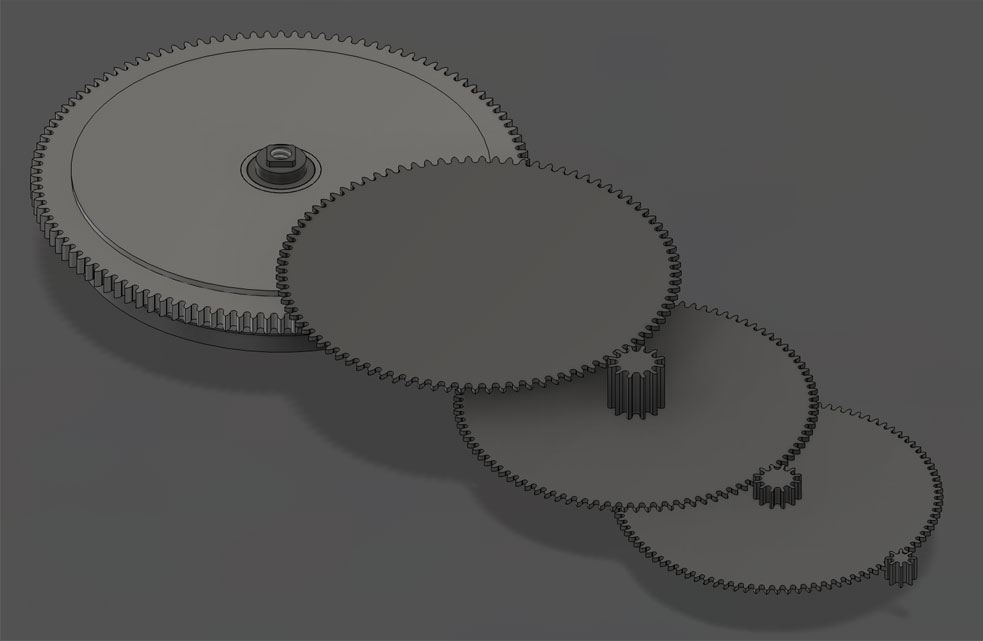
These wheels make all the ratios that will display hours, minutes, seconds in the same axis

Im really glad I layed them over together

why?

See that wheel with the curvy cutouts? well the cannon pinion fits in it, and with the current sizes I wont be able to fit the two wheels, need to rework the teeth counts!

sketch

Read standalone post

2024/10/25 16:21 UTC
TLDRI'm refining my watch movement design by following NIHS standards with some help from ChatGPT and Alex at Watch Repair Tutorials. Key focus: precise mainspring dimensions and a perfect barrel arbor fit to minimize friction, plus a smart choice of a bride rapportée for better automatic winding. Stay tuned for more as the prototype phase gears up! ⏱️
Show more Show less

Following NIHS - Refactoring.

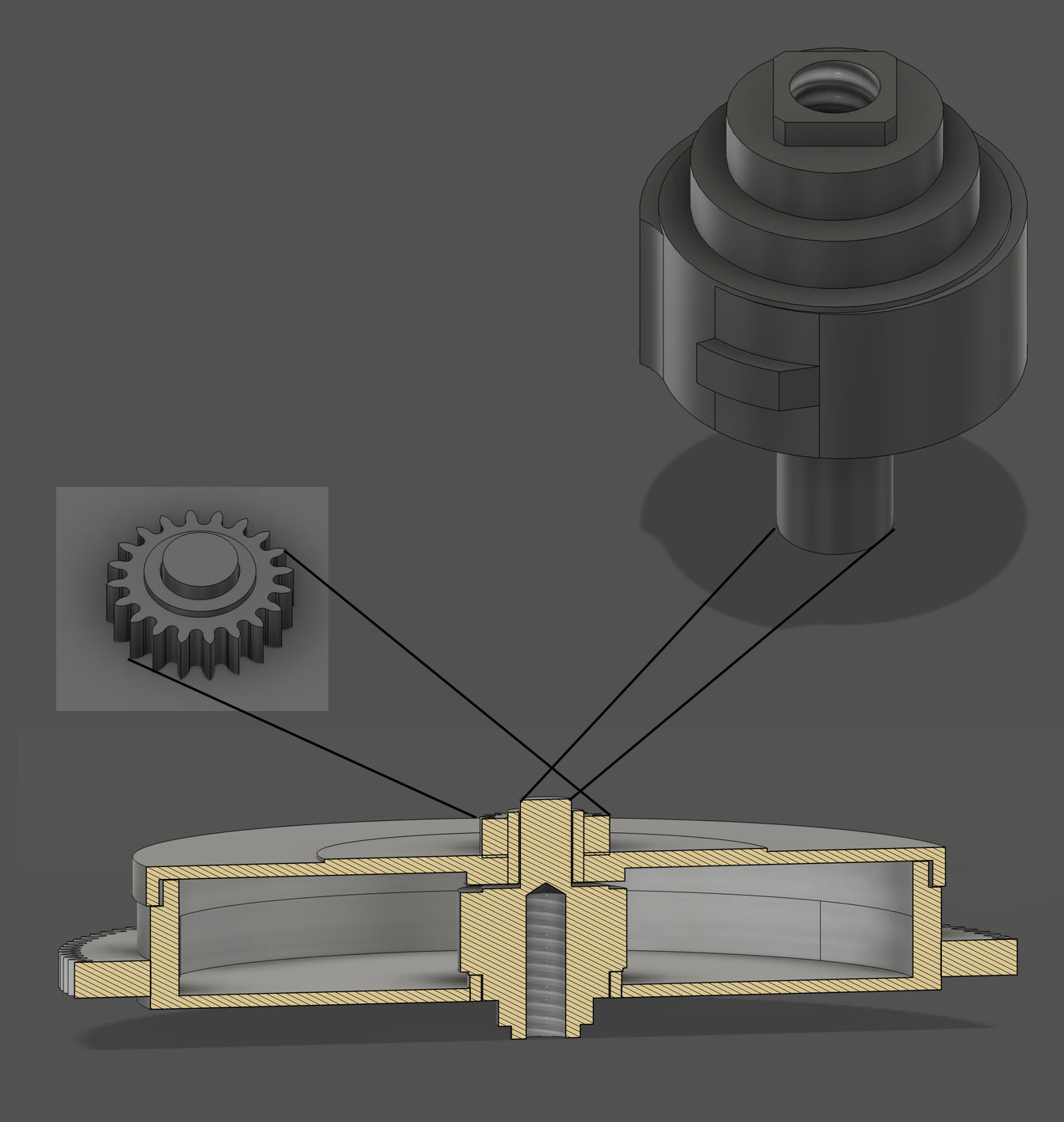
Been closely following NIHS standards, with the help of chatgpt, and Alex from watchrepairtutorials.com calculated precise mainspring dimensions:

  • Thickness: 0.13 mm
  • Length: 551 mm
  • Width: 1.33 mm

Additionally, I ensured the correct fit of the barrel arbor, with a total height of 1.58 mm to fit smoothly inside the barrel, maintaining a clearance of 0.1 mm on both the top and bottom to prevent friction. I've also decided on the use of a bride rapportée (inserted bridle) for its superior control in automatic winding. The technical details I've explored, including the use of Nivaflex mainsprings and calculations based on NIHS 11-02 standards, bring us closer to a well-engineered movement.

Stay tuned for more updates as I push forward with the prototype phase!

Barrel arbor, Mainspring barrel

sketch

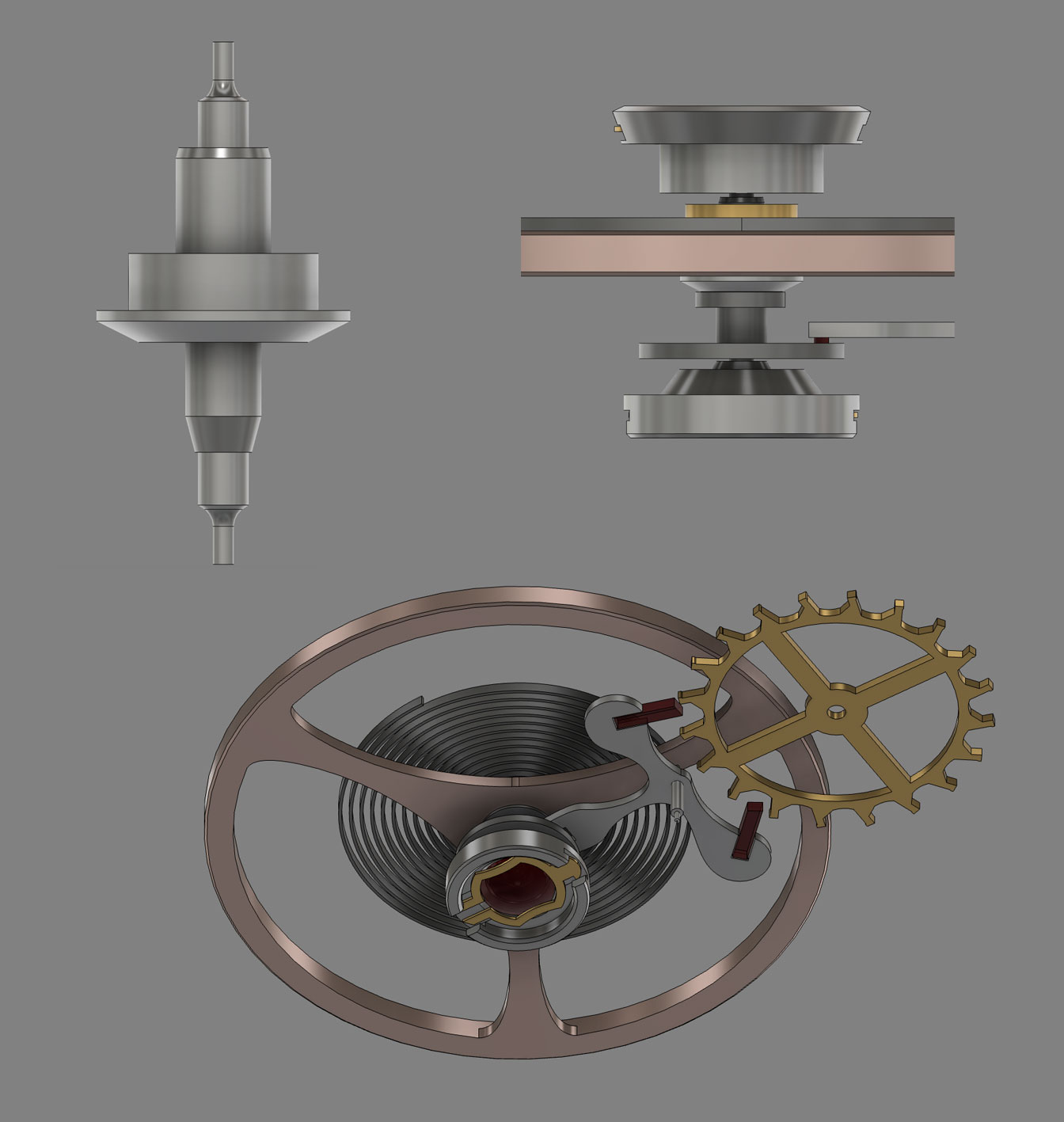
Escapement (yep missing the safety pin) -- target: 28800 vph

Im thinking of going with KIF, but need to explore more

sketch

Train of wheels -- with proper reduction for the fourth wheel and minute wheel

sketch

Read standalone post

2024/10/25 13:39 UTC
TLDRThe blog post is about fitting hands onto watch cylinders made to a specific standard (NIHSg 24-10), with the wheel mechanism still being a work in progress. It's a peek into the technical details of watchmaking and the ongoing process of refining the mechanism. If you're into the nitty-gritty of watch design, this one's for you! ⏱️
Show more Show less

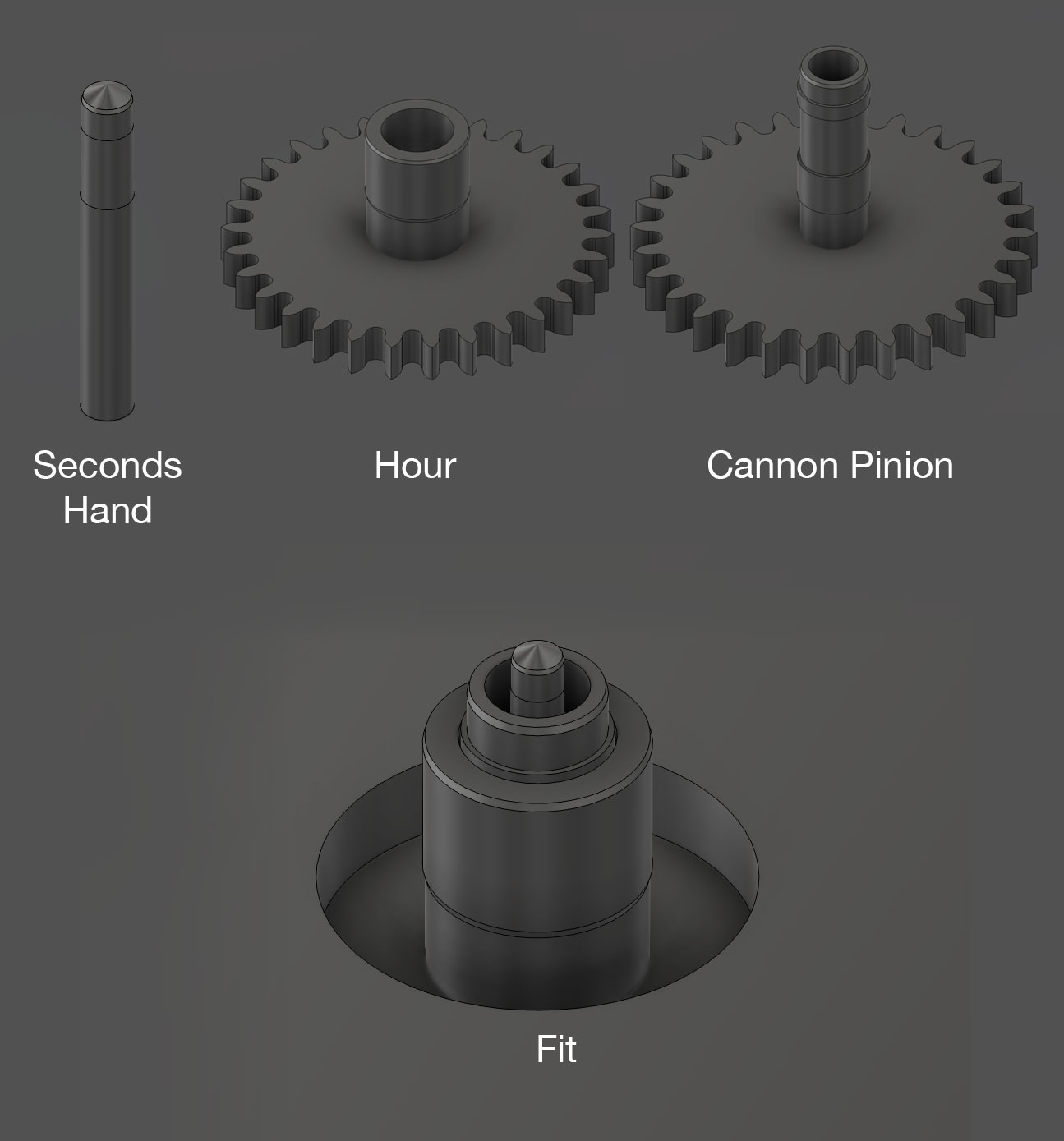
Hands fitting.

The cyclinders where made to NIHSg 24-10

The wheel mechanism under the cylinders is still WIP

sketch

Read standalone post

NOSTR:

npub1nvhq9vgkpahlugwcf3jsnpaq5lj3w3rk6lknnvf9r8h8ft2ja2asaqcn2a
Copyright 2025 The bitcoin watchmaker